Industry News
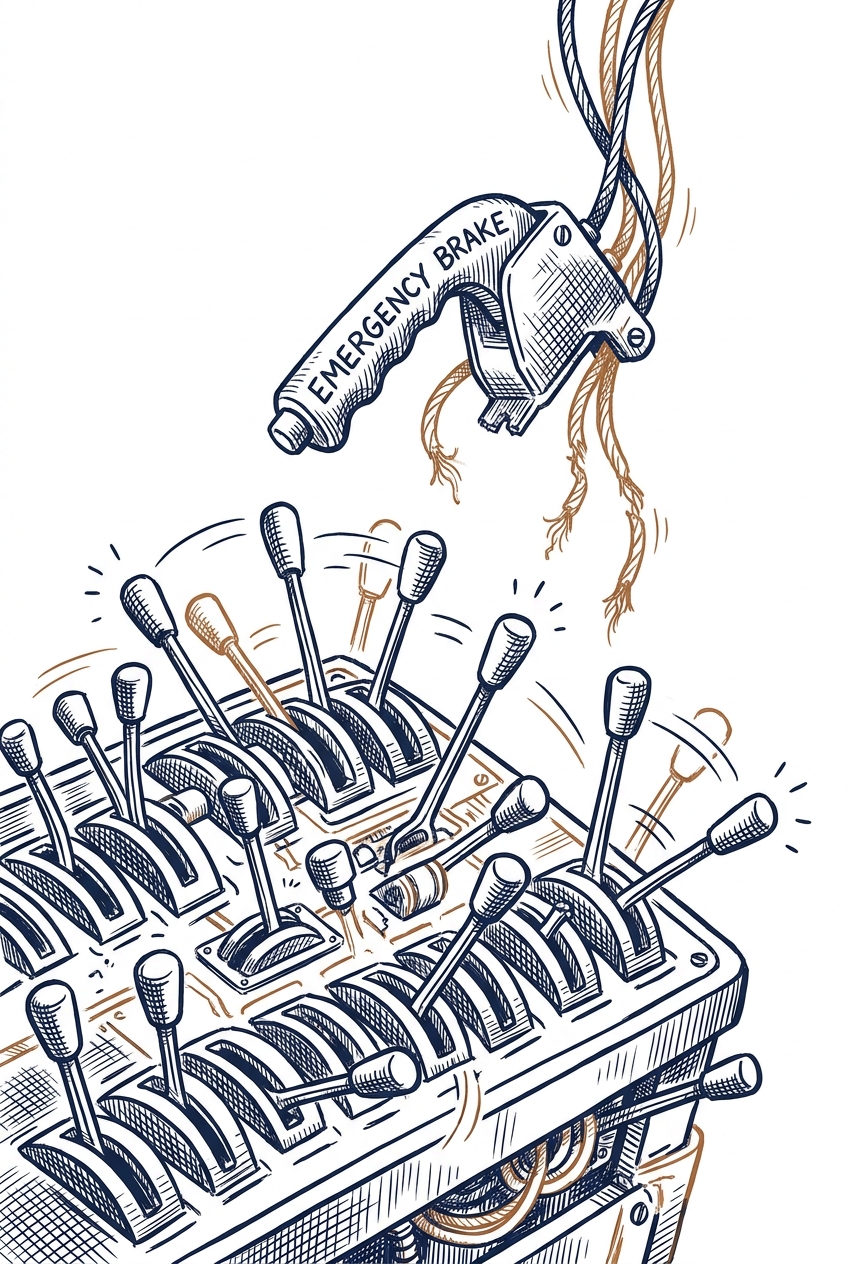
AI costs are spiraling beyond initial expectations, forcing companies to shift from rapid adoption to implementing strict usage controls and budget guardrails. The industry is moving away from unlimited AI access toward measured deployment, which means professionals should expect more restrictions on their AI tool usage and may need to justify ROI more carefully.
Key Takeaways
- Monitor your team's AI spending now before leadership imposes sudden restrictions—track which tools and features consume the most tokens
- Prepare cost-benefit justifications for your AI tool usage as finance teams increasingly scrutinize these expenses
- Consider switching to fixed-price AI tools or plans where possible to avoid unpredictable token-based billing
Source: TechCrunch - AI
planning
documents
code
Industry News
Bank of England Governor Andrew Bailey warns that energy capacity constraints may force rationing of AI access across economic sectors. This suggests businesses may face limitations in scaling AI deployments, potentially affecting availability and costs of AI tools professionals rely on daily. Organizations should prepare for possible service restrictions or prioritization systems.
Key Takeaways
- Evaluate your current AI tool dependencies and identify critical versus non-essential use cases to prepare for potential access limitations
- Consider diversifying across multiple AI providers to reduce risk if capacity constraints lead to service restrictions
- Monitor your AI service costs and usage patterns as energy constraints could drive price increases or usage caps
Source: Bloomberg Technology
planning
Industry News
Companies that rushed to replace employees with AI are now rehiring workers, revealing that current AI tools cannot fully replace human judgment and expertise. This trend suggests that AI works best as an augmentation tool rather than a complete replacement for skilled professionals. The pattern indicates that organizations need to carefully evaluate which tasks AI can truly handle independently versus where human oversight remains essential.
Key Takeaways
- Position yourself as an AI-augmented professional rather than someone replaceable by AI—focus on tasks requiring judgment, context, and human oversight
- Document the limitations you encounter when using AI tools in your workflow to demonstrate where human expertise remains critical
- Advocate for hybrid approaches in your organization where AI handles routine tasks while you focus on complex decision-making and quality control
Source: Fast Company
planning
Industry News
AI is fundamentally changing the build-versus-buy decision for business functions. As AI tools become more capable and accessible, companies can now automate or handle in-house what they previously outsourced, while also creating new opportunities to outsource AI-enhanced work. This shift requires professionals to reassess which tasks should remain internal versus external based on new AI capabilities.
Key Takeaways
- Evaluate current outsourcing arrangements against available AI tools that could handle similar tasks in-house more efficiently
- Consider bringing previously outsourced functions back internally if AI tools can now make them manageable with existing staff
- Identify new outsourcing opportunities where external providers using AI can deliver better results than your current internal processes
Source: Harvard Business Review
planning
Industry News
Microsoft's AI products are facing adoption challenges, with slower-than-expected sales and ongoing issues at GitHub. For professionals currently invested in Microsoft's AI ecosystem, this signals potential uncertainty around product roadmaps and feature development, though the company remains a major player with significant resources to course-correct.
Key Takeaways
- Monitor your Microsoft AI tool investments closely and maintain backup alternatives, especially if you're heavily dependent on GitHub Copilot or Azure AI services for critical workflows
- Evaluate whether current Microsoft AI products are meeting your ROI expectations before committing to expanded licenses or enterprise agreements
- Consider diversifying your AI tool stack rather than relying solely on Microsoft's ecosystem, given the reported adoption challenges
Source: Wired - AI
code
documents
Industry News
Anthropic has secured $35 billion in financing from Apollo and Blackstone to expand its AI infrastructure and chip capacity. This substantial investment signals continued development and scaling of Claude, which could mean improved performance, reduced wait times, and potentially new features for professionals already using the platform in their workflows.
Key Takeaways
- Expect improved Claude performance and availability as Anthropic scales infrastructure with this funding
- Monitor for new Claude features or tier offerings that may emerge from expanded capacity
- Consider Anthropic's strengthened financial position when evaluating long-term AI tool commitments
Source: Bloomberg Technology
documents
research
communication
code
Industry News
NVIDIA's Nemotron 3.5 Content Safety offers enterprises a production-ready moderation system that works across multiple content types and languages with explainable decision-making. This tool enables businesses to implement consistent safety controls across their AI applications, from chatbots to content generation systems, with audit trails that support compliance requirements.
Key Takeaways
- Evaluate Nemotron 3.5 if your organization needs to moderate AI-generated content across multiple languages or content types (text, images) in a single system
- Consider implementing this for customer-facing AI applications where you need documented reasoning for content moderation decisions to meet compliance requirements
- Assess whether the unified approach reduces complexity compared to managing separate moderation tools for different content types in your current workflow
Source: TLDR AI
communication
documents
Industry News
Anthropic is preparing to launch an upgraded version of its Claude model (codenamed Oceanus) that surpasses the current Mythos Preview. The model is currently in red team testing, which typically occurs one week before public release, though a security incident involving unauthorized resale may affect the timeline. Professionals should anticipate access to enhanced Claude capabilities in the near future.
Key Takeaways
- Monitor Anthropic's announcements for the official Oceanus/Mythos launch to evaluate whether upgrading your Claude subscription tier makes sense for your workflows
- Prepare to test the new model against your current Claude use cases once available, as performance improvements could enhance document analysis, coding assistance, and research tasks
- Consider the security implications highlighted by the resale incident when evaluating API access controls and usage policies in your organization
Source: TLDR AI
documents
code
research
Industry News
Industry experts discuss current challenges in deploying AI systems for production use, including OpenAI's expansion into personal finance applications. The conversation addresses practical concerns professionals face when moving AI tools from testing to real-world business implementation.
Key Takeaways
- Monitor OpenAI's personal finance initiatives as they may signal new integration opportunities for business financial workflows
- Evaluate your current AI tools for production readiness before scaling beyond pilot projects
- Consider the gap between AI experimentation and reliable deployment when planning workflow automation
Source: O'Reilly Radar
planning
Industry News
K-pop fans are confronting the creation of non-consensual deepfake content of celebrities, highlighting growing concerns about AI-generated imagery misuse. This incident underscores the reputational and legal risks organizations face when AI tools are used to create unauthorized content of real people. Professionals should understand that accessible generative AI technology requires clear usage policies and ethical guidelines.
Key Takeaways
- Establish clear policies prohibiting the creation of non-consensual AI-generated images of real individuals in your organization
- Review your AI tool usage guidelines to address deepfake creation and ensure compliance with emerging regulations
- Consider implementing content verification processes if your work involves publishing AI-generated media
Source: 404 Media
design
communication
Industry News
Major AI labs are preparing for IPOs while industry leaders acknowledge entering uncharted territory with AI development. This signals potential shifts in how AI tools are funded, developed, and priced, which could affect the stability and pricing of the AI tools you currently use in your workflow.
Key Takeaways
- Monitor your current AI tool providers for potential pricing changes or service adjustments as companies prepare for public markets
- Diversify your AI tool stack to avoid over-reliance on any single provider facing potential business model shifts
- Watch for new enterprise-focused features as companies seek to demonstrate stable revenue streams to investors
Source: Bloomberg Technology
planning
Industry News
AI-powered search is fundamentally changing how online content reaches audiences, reducing traditional web traffic to publishers and forcing businesses to reconsider their digital content strategies. This shift affects how professionals should think about content distribution, SEO strategies, and audience engagement in an AI-mediated internet. The broader economic and geopolitical topics covered have minimal direct impact on daily AI workflows.
Key Takeaways
- Reassess your content distribution strategy as AI search tools increasingly surface answers directly rather than driving traffic to your website
- Consider diversifying audience engagement channels beyond traditional SEO, including direct subscriptions, newsletters, and AI-native content formats
- Monitor how your target audience discovers content as AI-powered search changes user behavior and information consumption patterns
Source: Bloomberg Technology
research
communication
planning
Industry News
SAG-AFTRA's new four-year contract with studios establishes precedent-setting protections against AI-generated synthetic actors, signaling growing industry pushback against unauthorized AI replication of human work. This labor agreement provides a framework that other industries may follow when negotiating AI usage rights and compensation, particularly relevant for professionals whose work could be replicated by generative AI tools.
Key Takeaways
- Monitor how AI usage rights are being negotiated in your industry, as entertainment unions are setting precedents for protecting human work from AI replication
- Consider documenting consent and compensation terms before allowing AI tools to train on your creative work or professional output
- Watch for similar labor agreements in other sectors that may affect how AI tools can legally use professional content without explicit permission
Source: Fast Company
documents
Industry News
Enterprise AI in 2024 mirrors the internet in 1991—powerful infrastructure exists, but we're still waiting for the breakthrough applications that will make it truly transformative for business workflows. While AI models demonstrate impressive capabilities across writing, coding, and analysis, the 'killer apps' that will define how professionals actually use AI daily haven't emerged yet.
Key Takeaways
- Recognize that current AI tools are foundational—expect significant evolution in how they're packaged and integrated into workflows over the next few years
- Experiment with existing capabilities now (writing, coding, analysis) to build familiarity before the next wave of applications arrives
- Prepare for a shift from standalone AI tools to deeply integrated AI-native workflows, similar to how the web transformed from basic pages to full applications
Source: Fast Company
planning
Industry News
A lawsuit against Amazon's Ring cameras alleges unauthorized facial recognition data collection from non-customers, raising critical privacy concerns for businesses deploying surveillance or AI-powered camera systems. This case highlights the legal and reputational risks companies face when implementing AI technologies that capture biometric data without explicit consent, particularly in shared or public spaces.
Key Takeaways
- Review your organization's use of AI-powered cameras or surveillance systems to ensure compliance with biometric data collection laws and obtain proper consent
- Consider the privacy implications before deploying facial recognition or similar AI technologies that may capture data from employees, visitors, or the public
- Document clear policies about what AI systems collect, how data is stored, and who has access to protect against similar legal exposure
Source: Fast Company
planning
Industry News
While 84% of high school students now use AI for schoolwork, Gen Z's enthusiasm has dropped 14% in the past year, with nearly half of working Gen Zers viewing AI's workplace risks as outweighing benefits. This generational shift in AI perception signals potential challenges for organizations in adoption, training, and managing expectations as these workers enter the professional workforce.
Key Takeaways
- Prepare for incoming employees who may be skeptical of AI despite being familiar with it—focus training on practical benefits and risk mitigation
- Consider that widespread student AI use doesn't guarantee workplace proficiency—evaluate actual skills rather than assuming AI literacy
- Monitor team sentiment about AI tools regularly, as enthusiasm can decline quickly even among frequent users
Source: Fast Company
planning
Industry News
AI automation is eliminating 35% of entry-level positions since 2023, creating a talent pipeline challenge for businesses. Companies using AI to replace junior roles may face difficulties finding experienced mid-level talent in the future, as traditional career development pathways disappear. This shift requires businesses to reconsider how they develop internal talent and structure their teams.
Key Takeaways
- Evaluate your team's talent pipeline to identify gaps created by reduced entry-level hiring and plan alternative training pathways
- Consider implementing structured mentorship or apprenticeship programs to develop skills that junior employees traditionally gained on the job
- Review which entry-level tasks you've automated with AI and assess whether eliminating these roles impacts your future talent development
Source: Fast Company
planning
Industry News
Data infrastructure companies are restructuring their pricing models to accommodate AI agents and new deployment patterns, moving away from traditional billing approaches. This webinar addresses how changing unit economics and AI-driven usage patterns are forcing infrastructure providers to treat pricing as a continuously iterable product feature rather than a static business decision.
Key Takeaways
- Monitor your AI tool costs as providers shift pricing models to accommodate agent-based usage patterns that differ from traditional human usage
- Evaluate how your organization's deployment choices (cloud vs. on-premise) affect who bears infrastructure costs under evolving pricing structures
- Prepare for potential pricing changes from your data and AI infrastructure vendors as they adapt billing models for continuous iteration
Industry News
AMD's new Radeon RX 9070 GRE graphics card, priced at $549, underperforms compared to the superior RX 9070 that launched at the same price point over a year ago. For professionals running local AI models or using GPU-accelerated workflows, this represents poor value and suggests waiting for better options or considering the original RX 9070 if still available.
Key Takeaways
- Avoid purchasing the RX 9070 GRE at $549 as it offers worse performance than last year's RX 9070 at the same price
- Consider alternative GPU options or wait for price adjustments if upgrading hardware for local AI model inference
- Evaluate whether your current GPU setup remains adequate rather than upgrading to underwhelming new releases
Source: Ars Technica
code
research
Industry News
A major data center project was cut by 50% following community protests, highlighting growing infrastructure constraints for AI services. This signals potential capacity limitations that could affect cloud AI service availability and pricing for business users. The pushback against data center expansion may lead to increased competition for computing resources among AI providers.
Key Takeaways
- Monitor your AI service providers for potential capacity constraints or price increases as data center expansion faces community resistance
- Consider diversifying across multiple AI platforms to reduce dependency on any single provider's infrastructure
- Evaluate on-premise or hybrid AI solutions for critical workflows if cloud capacity becomes constrained
Source: Ars Technica
planning
Industry News
A USB-connected speaker can automatically install software on Windows PCs without user interaction, highlighting a broader security concern for any USB device. This attack vector is particularly relevant for professionals who regularly connect peripherals to work computers that may contain sensitive AI models, proprietary data, or client information. The manufacturer doesn't consider this a vulnerability, underscoring the need for organizational USB device policies.
Key Takeaways
- Review your organization's USB device policy and consider restricting auto-installation of drivers from unknown peripherals
- Disable automatic driver installation in Windows settings if you frequently work with sensitive AI models or proprietary data
- Verify the source and legitimacy of any new USB devices before connecting them to machines with access to confidential information
Source: Ars Technica
code
research
Industry News
Major investors are backing both OpenAI and Anthropic simultaneously, treating AI model competition like consumer brands rather than winner-take-all markets. This signals that multiple AI platforms will likely coexist long-term, meaning professionals should expect to work across different AI tools rather than committing to a single provider.
Key Takeaways
- Diversify your AI tool stack across providers rather than betting on a single platform, as investors expect multiple winners in the AI space
- Prepare workflows that can adapt to different AI models, since vendor lock-in appears less critical than previously thought
- Monitor pricing and feature developments across both OpenAI and Anthropic, as competition should drive better value for business users
Source: Wired - AI
planning
Industry News
Google's $920M monthly payment to SpaceX for compute infrastructure signals unprecedented demand for its AI products, indicating potential capacity constraints across major AI providers. This massive infrastructure investment suggests Google is scaling aggressively to meet enterprise and consumer AI demand, which may affect service availability and pricing for business users relying on Google's AI tools.
Key Takeaways
- Monitor Google AI service performance and availability, as this infrastructure expansion suggests current capacity may be strained during peak usage
- Evaluate backup AI providers for critical workflows to mitigate potential service disruptions during high-demand periods
- Anticipate potential pricing adjustments for Google AI services as the company invests heavily in infrastructure to meet demand
Source: TechCrunch - AI
planning
Industry News
New York State has passed a one-year moratorium on new large data centers to assess environmental and energy impacts. If signed into law, this could signal the start of regulatory constraints on AI infrastructure expansion, potentially affecting cloud service availability and pricing for businesses relying on AI tools hosted in affected regions.
Key Takeaways
- Monitor your AI service providers' data center locations and expansion plans, as regional restrictions could affect service reliability or costs
- Consider diversifying across multiple cloud providers or regions to mitigate potential infrastructure constraints
- Watch for similar legislation in other states that could create a precedent for AI infrastructure regulation
Source: The Verge - AI
planning
Industry News
Tech leaders at recent developer conferences are signaling a fundamental shift in how we'll interact with laptops through AI integration. Nvidia's CEO Jensen Huang outlined a vision where AI transforms the basic computing experience, suggesting professionals should prepare for significant changes in how they use their primary work devices in the near future.
Key Takeaways
- Monitor upcoming laptop releases for native AI capabilities that could streamline your current workflows
- Evaluate whether your current hardware will support emerging AI features or if upgrades may be necessary
- Prepare for a shift from traditional application-based computing to AI-mediated interactions with your device
Source: The Verge - AI
planning